Monday, September 24, 2012

Bunny Biz

Politicians talk about jobs of the future all the time.  I wonder.  Especially after reading Brad Stone's report in Bloomberg Businessweek, "My Life as a Task Rabbit." And what might that be? It's all about what their CEO calls "service networking." Their video explains: 


If the video doesn't play, you can click here

Leah Busque, Task Rabbit  Founder
Meet Leah Busque, Task Rabbit's founder and CEO. Yes, she quit her day job with IBM to follow her dream. Yes, her idea is really cool for time-stretched achievers like herself. And her help-needed solution is very innovative, using the web and smart phones to manage all the transactions, thereby updating the biz of "temp work."  Businessweek's Brad Stone summed it up as "a uniquely American safety net for the unemployed or underemployed, who will now have somewhere to turn when they need to make money." True. But I wonder if this approach is also an example of where a lot of our jobs are headed?  

Here's what I mean: the new bunny taskers are all independent contractors who compete with each other as they bid on jobs with the lowest bidder getting the work. So labor becomes a commodity for sale at the lowest cost. And the workers have no security, no health care and often no way to shine based on ability. They are labor, pure and simple. And to get the task they have to bid low, work hard and fast, and take as many jobs as they can. Does any of this sound familiar? 

So what should we glean from all this? First of all, innovation doesn't always make things better. Second, there is at least a generation or two of us in these distressed times that are trying to deal with this issue right now.  


Which brings us to a successful Kickstarter campaign by Aaron Cassara to make a film called Barista. The movie's plucky heroine wants to quit her job at Starbucks and reinvent her life - until she's diagnosed with MS and has to stay there for the health care coverage. As Aaron describes it, "Barista is ... a generational narrative about the precarious service worker. It's about the crippling costs of health care and education, about paying the bills in a lagging economy while still trying to move forward." Here's the trailer:


If the video doesn't play, you can click here.

Well, we must be on to something here, because the plight of these folks is quickly becoming a brand. Or let's just say, a brand marketing snatch of issue. As you'll see in Benetton's new campaign for Unemployee of the Year. Below is the video version.


If the video doesn't play, click here.


So what's the takeaway? Well, there are many truths, often contradictory, that exist at the same time. Clearly the web, via Kickstarter, has opened the door wide to young filmmakers like Aaron Cassara. And yes, some people will benefit from operations like Task Rabbit. But as we've seen in the local video community here in Washington, DC, as older companies go out of business, more nimble ones spring up. Lower standards and cheaper gear also reduce the barriers to entry. And day rates for production people are about the same or lower than they were 10 years ago.  So the bunny biz has spilled over to the freelancers who populate the video production industry too. 

And at the same time as all this is happening, there is a real blossoming of creative energy and enterprise.  As we'll see in my next post. 

Monday, September 17, 2012

Ken Burns on Story

Sarah Klein 
Tom Mason
Okay, you're a filmmaking team and you have this really cool idea. Do a passion project and make a video about a subject you really care about. Story-telling. It's a lot harder than it looks - we're talking non-fiction here - and something you and a lot of other creatives struggle with all the time.  So who do you know who's a good storyteller? How about Ken Burns?  Okay, you do an interview and ask him to tell you all about it.  

So you get it done. Then back home and look at what you have. It's 90 minutes of Ken Burns talking. Well, he may be a documentary superstar, but it's not a film and it's certainly not a story. So now what? Make it happen in post. And you do. Here's the very effective result:


If the video doesn't play, click here.  

The production is the work of cameraman/editor Tom Mason and producer Sarah Klein, aka Redglass Pictures. Their piece is graceful, spare and intimate. I like how the music draws you in and creates flow. And the pacing - the pauses help you connect with what's being said and also build a quiet tension. The Tom and Sarah introduce a film projector metaphor to help bridge the ideas and treat the stills to give them more depth literally and figuratively.    

The length feels right - long enough to explore a few ideas, delve into the personal side, leave an impact and be done.  It helps you see the creative challenges we all face as we bring shape and meaning to our work. And a little insight into what motivates Ken Burns, too.

Atlantic Magazine has a short interview with the filmmakers here.  If you want to know more about them you can visit their website. If you do, check out their video "Miracle on 22nd Street." And if you want to learn how this project came to be, there's a podcast interview that's very informative here.

Tom Mason described their creative process as "stumbling in the dark."  Perhaps.  But as their work reveals, with enough care and time you'll find a way to let your light shine.


Monday, September 10, 2012

Capturing the Creative Spirit: Michael Graves


Michael Graves
How best to capture the creative spirit? In this case, how to understand the work of architect and designer Michael Graves, via two very different approaches on video?

Let me offer a little background to what I'm talking about.  Early on, as a film and video editor and later as a writer, I learned to "show it," not "tell it."  That means to do your best work, you have to put aside the explaining part of your brain and work with the feeling side to create moments with images and sound that really communicate.  You let the pictures and events tell the story.
Once you've given the video a visual style and structure, then you can add that other layer of meaning (the narration or voice over) to amplify the message. Or not, depending on what you're going for. In essence, this is the original approach to documentary and also the basis for cinema verite. And even with today's more content driven approach, the tension in the creative process is still about what drives the story: words or images. Telling or showing.


The Humana Building by Michael Graves 

So, back to the challenge of capturing the creative spirit: how to describe an innovator like Michael Graves?  As an architect, his buildings give shape to city skylines around the world. He designs tea kettles and other products found in many of our homes.  And now that he navigates with the help of a wheel chair, he's working to improve the quality-of-life for others facing similar challenges.

This image and most others from the Michael Graves and Associates Website
You could describe him as a man of genius, a visionary and innovator. Some call him the father of post-modernism, as you can see in this Portland, Oregon building that helped launch that phase of his career.  
from the Wikipedia site
Today, his body of architectural work is broad, deep and visually arresting. Just peruse his page on Wikipedia and scroll down the list of the important buildings he created.  Or check out his website to see what his firm has  been doing recently.  

But all of this is by way of giving you a little context for the challenge facing the two videos. Each explores the man, his importance and creative drive, but with two very different approaches. 

First up is a video I found on the site of Dwell Magazine.  If it doesn't play in this post you can also find it here.  


I like how this video is more impressionistic than informational. It explores the quiet beauty of his home and furnishings as a metaphor for Graves' artistic and creative impulse. You can feel the influence of Italy and Europe as the camera meanders through its rooms and garden. The video is like a visual poem, enveloping you in an almost meditative quality. While his comments suggest his thoughts and themes, the overall effect is more of a moment shared, an ambience savored. Everywhere you feel Graves' touch and sensibility and the images are visually engaging. 


Time Magazine called the Humana Building one of the 10 best buildings of the decade
From the PBS documentary
The second video is Architect Michael Graves: A Grand Tour and the link will take you to an excellent site devoted to the man and his work. The half hour video was produced by PBS station WTTW and embraces a typical present-day documentary approach. I should mention it takes a little while for the piece to focus on Graves, but when it does I found it very informative. It also tells you how his work developed over time and the influences on his approach to design. 

St. Coletta School for children with cognitive and physical disabilities
But, overall, I found it more like a video history lesson with the visuals playing a secondary role. The content delivered via the narration and interviews drove the piece, and it was much less poetic. So you feel more detached from the person and what he was about.  Perhaps more intellectually satisfying, but much less emotionally involving.  And therein lies the key difference between the two approaches.  

And while I personally prefer the more poetic, visual approach, what I did put together from watching the two programs is that, along with huge talent and skill, Michael Graves also has a healthy dose of grit and determination.  His strength of character and ability to refocus his creative energy inspires me. And his story reminds me once again of what you can accomplish, once you put your mind to it.

Monday, September 3, 2012

A Book By Its Cover

Chip Kidd with some of his book jackets

My mother told me not to judge a book by its cover, but Chip Kidd would say otherwise.  He's been designing dust jackets since 1986 and, just looking at the some of the examples below, you can see a great sensitivity to the power of words, text and images.


When you think about it, a successful cover has to work on different levels. It should entice you to pick up the book in the first place and also convey a sense of what you'll encounter as you make your way through the pages.  It's the only visual representation of all those words on the page.  And it has to help sell the book.  So there's a lot more thought and creative effort required than just the aesthetics of good graphic design.    

Chip has been lauded for the visual punch he puts into his work.  A few years ago some of his designs and the thoughts that created them were discussed in Time Magazine. Below is an example of his approach to an eight-book series on the life of Buddha.


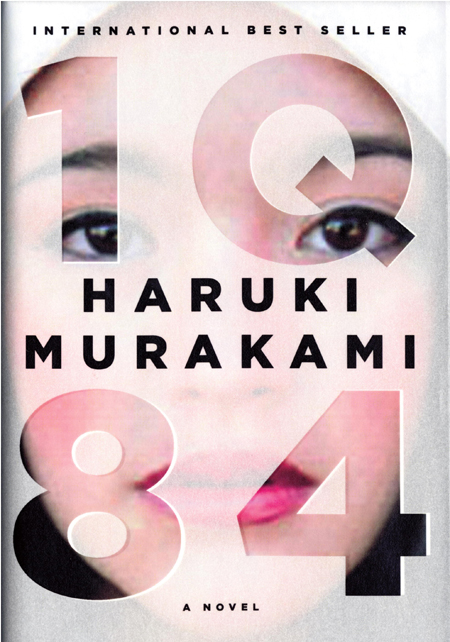
And I was fascinated by one of his more recent efforts for the book, IQ84 by Haruki Murakami.  In Murakami's book, a woman seems to enter a parallel reality and as Chip wrote for the publisher, he wanted to reflect that by "an interaction of the book's jacket with the binding/cover underneath." 
So here is the book binding


Here is the translucent book jacket

And here is the final effect


If you want to spend a few more minutes on this, Chip explains his thoughts about design, books and their covers at a Ted talk.  And while you may find his style a little too NYH (New York Hipster), what he has to say is funny and certainly makes you think about creating those first impressions.  If the Ted video doesn't play, click here.


Here's a link to his website which also has some random observations I liked.  And if you still want more, here he is with his band ARTBREAK and "Asymmetrical Girl." Check out the visual treatment for this semi-satirical visual mashup.  If the ARTBREAK video doesn't play, click here.

Monday, August 27, 2012

Now You See It

For many of us, the biggest problem with ideas is that they're hard to see. They float around in an abstract environment of words and meanings. And we can certainly use them to construct elegant castles-in-the-air. But ideas also lend themselves to confusion, uncertainty and misinterpretation. So how to make an idea concrete? How to visualize its impact and outcomes?


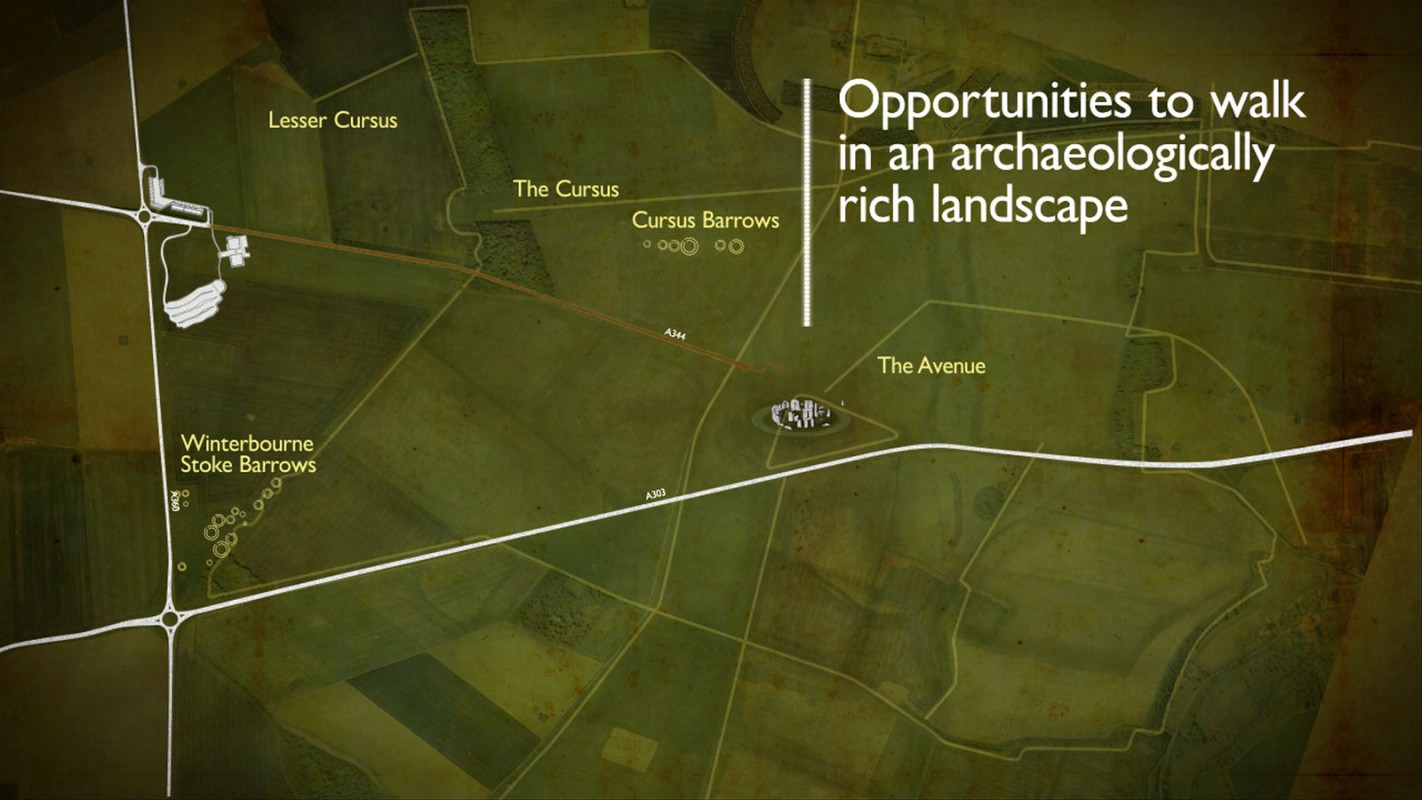
I'd like to point you to an elegant example, recommended by my colleague Bob Burnett. A video from the British design and architectural marketing firm Squint/Opera and their Stonehenge project. You'll find it a little later in this post.


Their design approach is simple and elegant. Without commentary or narration, they use fast-motion images and text to clearly portray the issues. And the video creates a visual vocabulary to show the present day approach to this national treasure as tatty, unseemly and poorly conceived. Stonehenge definitely needs an intervention.


So what will that be? The imagined solution uses a combination of images and computer animation to illustrate the future. Here's a better-designed ambience for Stonehenge, with a sense of "before" and "after" deftly realized. The music track walks you through the visual journey with crisp, easy steps.  Its bell-like qualities heralding a new age for the ancient monument.  Well-imagined and executed.  If the Stonehedge video doesn't play, you can find it here.


I've looked at other videos on their site and have to admit that I dislike all of them. Where the Stonehedge video is an understated delight, the others are over-the-top, annoying and much too self-important. I guess the knack for visual poetry is doled out more in tablespoons than teacups.  

But to end on a more upbeat note, I did like the design ideas they had for The Doodle Bar. For this funky tavern, their hipster artiness makes its mark.


Monday, August 20, 2012

Tactical Urbanism is Popping Up Everywhere


Call it "activated spaces," "tactical urbanism" or "pop ups," there's something afoot in the mashup of urban neglect, a sagging economy, digital tech, and burgeoning entrepreneurism.  And it's cropping up in DaytonAtlantaSan Francisco, Fort Worth and anywhere you can imagine an instant art/food/shopping/play/fun experience.
New York

Fort Worth

Detroit
What is it?  It's a down and dirty way to re-imagine the urban landscape by inserting instant gardens, art, shops, food, music and anything else that can be plunked, dug, hoisted,or inserted into the empty lots, abandoned buildings and decaying streets of our cities.  Or you can think of it as a flash-mob-inspired taking-it-to-the-streets effort at revitalizing neighborhoods. It could be anything.  Even libraries, big
New York
and small
New York
Here's a blog devoted just to them.  And then there's chair bombing  
DoTank gets ready to chair bomb the neighborhood
And the results

You'll find a cool video and explanation of chair bombing from the DoTank site.


And, just for fun, here's a link to a stepping video performed on the Highline, one of the great city-sponsored new urbanism projects.


If you think about social media like Facebook and how it created a virtual community, this urban guerilla art/design/living movement is bringing that new sense of connection to the streets. I find all of it inspired. Creative. And of the moment. It certainly is fun. And it does compel us to see where and how we live with each other with new eyes. And a new sense of the possible.


Monday, August 13, 2012

Window on the Soul: The Portraits of Dawoud Bey

Dawoud Bey
Dawoud Bey was hoping to be a jazz drummer when he went to see "Harlem on my Mind" and was struck by the images of everyday people displayed on the museum walls.  As a 16-year-old he'd just received a camera and was inspired to do his own street photography in Harlem.  That collection of work, exhibited in 1979 as "Harlem, USA," was the beginning of an impressive career exploring the photographic portrait.  A retrospective of "Harlem, USA" is now at the The Art Institute of Chicago. This image "Man in a Bowler Hat" was taken at that time.  
A Man in a Bowler Hat, 1976


Notice the man's open, friendly and curious expression and how the gesture of his hand at the bottom of the image adds a sense of relaxed  elegance.  Those elements give voice to the subjects' personality and character and are a hallmark of a Dawoud Bey photograph.

The image below, taken a few years later, has all the elements of his recent color work:  The girl is posed, as are all his subjects, but natural and relaxed.
A Girl in a Deli Doorway, 1988
But unlike street photographers who try to capture an unguarded moment, Bey wants his subjects to participate in the photograph.  "A Girl in a Deli Doorway" is at once simple and complex.  She offers a wistful curiosity tempered by uncertainty.  And while she appears open and engaged, she's also holding back, and partially hidden with her hand closed. Look at the background and framing.  It's very dynamic, with strong angles that take you into the background and the hard vertical of the wall that brings you back to the girl.

Just capturing a person's essence with your lens is difficult enough.  And working with teenagers?  Well, once again Bey has a deft touch.  Here are some portraits of high school students from his exhibit, Class Pictures.
This work led to a position as artist-in-residence with Emory 
University.  Part of his time there was spent in portraying the University's commitment to diversity, called it The Emory Project.  And to make his point, he posed unlikely couples such as the ones below.

Kali Ahset-Amen, Sociology Grad Student and Geshe Ngawang Phende, Buddist Monk

Paula Biegelsen, Student and Shirley Simms, Custodian
Here's a link to a video showing Bey working on the Emory Project.  And here's a link to Bey's website, which has lots of images of his other work.  In all, you can see a real celebration of everyday people.  And a deep respect for honoring their place in the world.  

Dauwoud Bey
I like seeing the world though his eyes and meeting the people who inhabit it.  It reminds me of how much we have in common with each other.  And about those sometimes subtle qualities that we all share on our journey though our days.